- Naples News Now
- Posts
- Overdevelopment and Climate Resilience Lead the Conversation in Naples’ 2045 Vision
Overdevelopment and Climate Resilience Lead the Conversation in Naples’ 2045 Vision

Robert Desiano
November 19, 2025
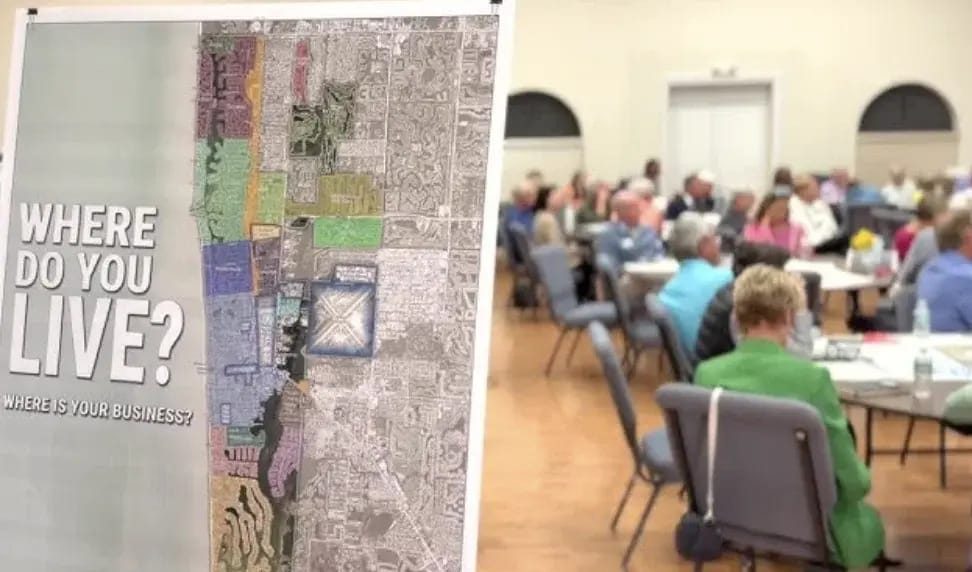
As the city of Naples moves forward with its “2045” update to the Comprehensive Plan, a recent public workshop brought into sharp focus the tensions between growth, character and climate resilience. Local business owners, longtime residents and community advocates gathered to weigh in on how Naples should evolve during the next two decades — and the feedback revealed some loud, consistent themes: concern about overdevelopment and a desire for stronger safeguards against flooding and storms.
Keeping the Small-Town Feel Amid Rapid Growth
One of the most repeated refrains at the Nov. 13 forum was that many residents feel the city is drifting away from the reason they chose to live here. “They want to maintain a small-town feel … that doesn’t jive with the high-density development that is going on right now,” said one attendee.
Business owners echoed the sentiment, pointing to larger projects such as the new Four Seasons hotel and luxury condominium towers that they believe shift the character of Naples. Several participants also said a parcel near David Boulevard would have been better used for affordable or mid-range housing rather than high-end development.
This is not a minor concern. Naples’ brand as a premium but relaxed Gulf-coast city has become intertwined with its value proposition to both residents and second-home investors. If the perception shifts toward relentless high-rise towers and dense zoning changes, that value may face pressure — both economically and socially.
Facing the Floodwaters: Resiliency Moves to Center Stage
Beyond growth, the conversation veered swiftly into how Naples can withstand the next major storm, sea-level rise and infrastructure strain. During live polling at the forum, flooding and resiliency outpaced even growth as the major worry for many. The city’s project website states the update will “revise policies to promote climate resiliency, balance redevelopment with preservation of Naples’ unique small-town character and manage the pressures of growth and development upon City resources and infrastructure.”
For Collier County and Naples, that means tough policy discussions ahead: How tall should buildings be in vulnerable zones? What role should wetlands play in drainage? Should infrastructure be upgraded before approving further high-density projects? These are not theoretical questions — they have real-world consequences for safety, land-value preservation and insurance costs.
Residents, Real-Estate and Local Business
Residents pushing back on overdevelopment are often doing so out of fear that local lifestyle and real-estate values are being compromised. Smaller lots, fewer trees, more cars, more traffic: all factors that undermine the appeal of living in Naples. For real-estate agents and developers, this shift in public sentiment may mean more resistance when large-scale zoning or height-increases are requested.
For business owners — especially hospitality, retail and services — the implications are mixed. On one hand, growth brings opportunity: more visitors, more second homes, more local spending. On the other, if the city becomes so dense and traffic so burdensome that quality suffers, the luxury-oriented model that underpins much of Naples’ economy could falter.
The Roadmap of the 2045 Plan: What to Watch
According to the city’s timeline, the “Naples 2045” update began in March 2025 and is expected to wrap up by Fall 2026 after multiple phases of community engagement, draft review and state agency review. Key documents already online include a Current Conditions Report and a Critical Assets & Facilities Vulnerability Assessment (2024). The next major steps will involve more public workshops, proposal of draft amendments and formal hearings before the Planning Board and City Council.